


This question can have many different answers. Here is my take on it, based on knowledge from some of the most experienced tattoo artists in the industry.
There are a few criteria I feel a good tattoo should always meet:
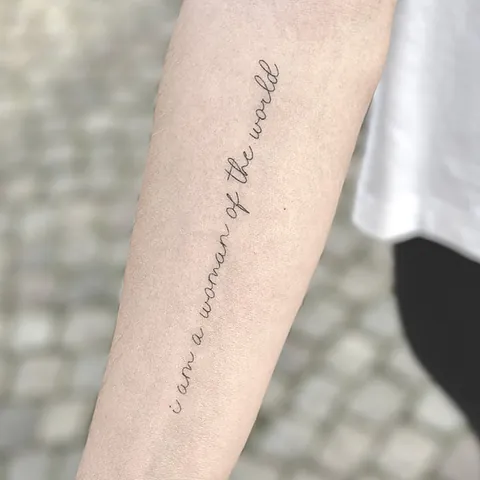
The tattoo should respect the body’s flow
The body has natural lines that you can’t really get around. How those lines run varies from person to person, of course, but you can quickly make a beautiful design look wrong by placing it in a way that does not suit the body it sits on.
A simple example would be placing a tattoo of a circle on a part of the body that is not flat – then the circle does not really stay a circle, but turns into an odd oval. That is of course a very simple example.
A more complex example is portraits. Faces generally have an oval shape with specific proportions within it, so if you place a portrait tattoo on a very uneven part of the body, the proportions are quickly distorted and it looks very strange. You would never place a portrait on the elbow, for instance, because the skin around the elbow is uneven and it sits right in a bend.
There are many examples like these, but they illustrate that there are unwritten rules about where it makes the most sense to place particular tattoos and designs.
Even though it seems incredibly simple, I unfortunately often see tattoo artists who have no understanding of it at all – and you can quickly find yourself looking at an otherwise excellent design and thinking: “What a shame that it is placed right there.”
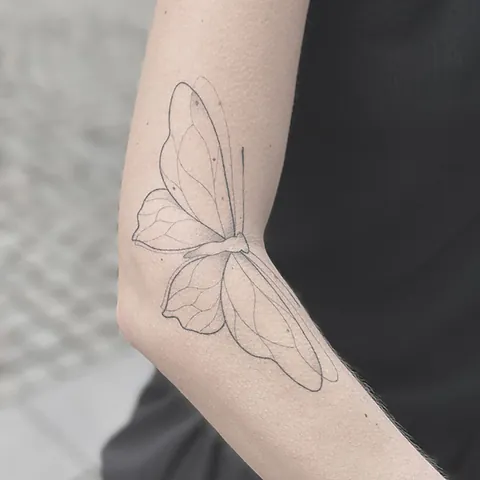
The tattoo should have balanced flow and a harmonious composition
This leans very much on the previous point, but now we are talking more about flow and composition within the design itself, and the relationship between the different elements or lines in it. That also says a great deal about where it can sit on the body.
A design should usually be harmonious and balanced. If a client wants a rose and a lion, for example, you can rarely just place them right up against each other. It often makes sense to add an extra element between them – perhaps some smoke (that one is really popular) or some shading that separates things, so the design becomes more readable and organic.
Another option would be to let the rose overlap the lion. That would add a little depth and movement to the tattoo, so it does not look so flat and dull.
Again, these are just examples, so you can get an idea of what I mean. How it works in practice varies from style to style, of course.
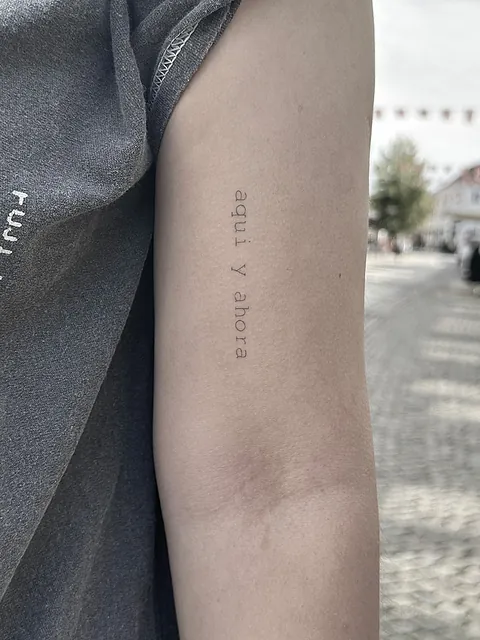
The tattoo should be easy to read
Many tattoo artists may disagree with this point, but one of the most important things I judge tattoos on is whether they can be read from a distance. I think a skilled tattoo artist takes into account whether their work is easy to read.
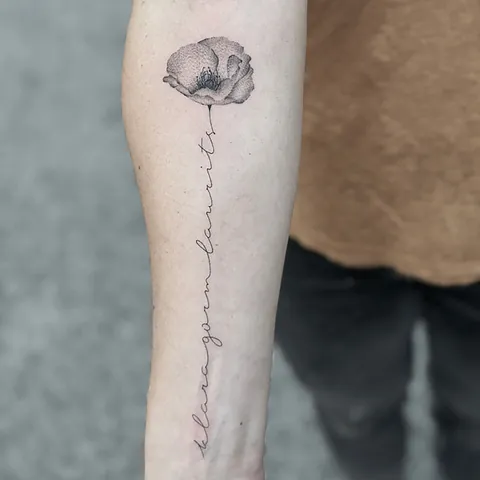
This is of course most relevant for larger tattoos, since the point is often that they should be seen. A fineline tattoo, on the other hand, often needs to be more discreet, so it is not important that everyone can see it from a distance – it should be more personal and subtle.
If we are talking about a large tattoo, such as a full back, you should ideally be able to tell the different elements apart from a little way off. If you have to get right up close to see what it depicts, I feel some of the point is lost. Why tattoo a whole back if someone standing two metres away cannot see what it is?
Poor readability can come down to several things, such as the artist not doing the shading properly or not using enough contrast. Contrast matters because it helps separate the elements in a tattoo and makes it more readable – and conversely, if contrast is missing, the elements blur together at a distance.
It can also happen that the artist has crammed too many elements into too little space. For example, a good rule of thumb when doing a full arm is to have one large element on the forearm and one large element on the upper arm. That way you keep it readable.
This also makes the tattoo last better, which brings us to the next point.
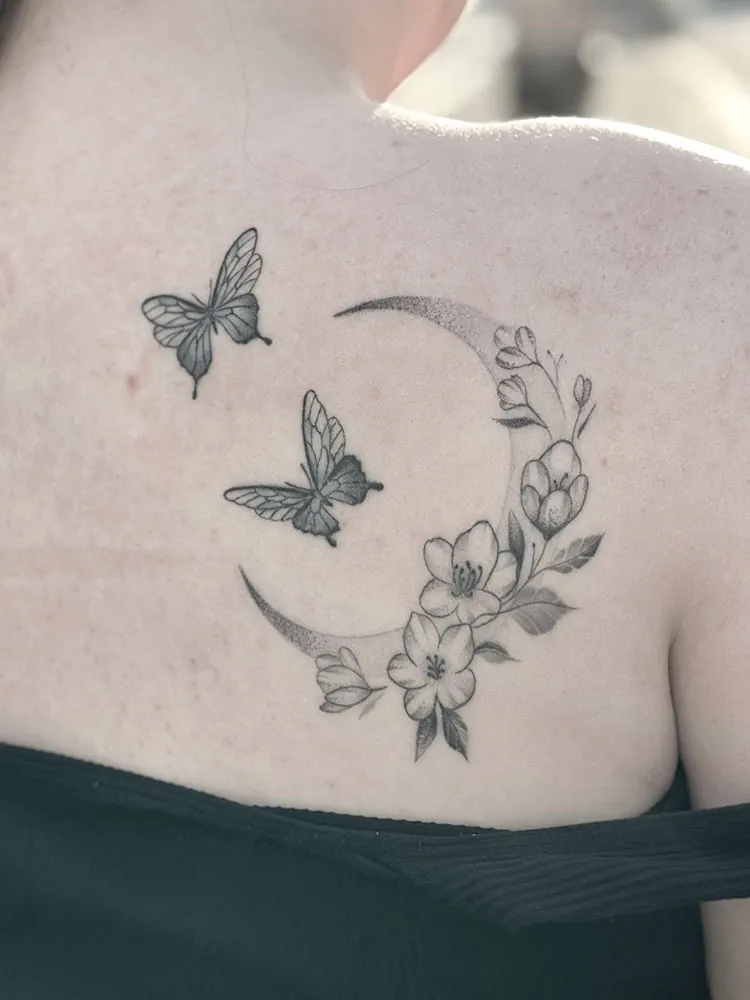
The tattoo should be durable
Tattoos are permanent, so they should ideally stay looking good for as long as possible. Size matters a great deal here – small tattoos will rarely look good for the rest of your life. If you want something that lasts a really long time, we are talking about larger tattoos such as a full arm or a back.
Skin ages, and that is a fact we cannot get around. All tattoos “live”, in a way. So as tattoo artists we have a responsibility to make sure the tattoos we create stay looking good for as long as possible.
The best durability is achieved with designs that are airy and not too detailed in too little space. That can be hard to judge as a client, so it is important to listen to your tattoo artist. If your artist says a design will not last, they are usually right.
Some clients still choose a design that the tattoo artist may not consider particularly durable, and that is completely fine – as long as they understand the possible consequences.
I personally always try to inform my clients as well as I can, so they can make the best decision – especially now that I mainly do small tattoos, which simply do not have the same durability as larger pieces.
The client should be happy with the tattoo
There are plenty of tattoo artists with slightly oversized egos who sometimes put their own artistic ambitions ahead of the client’s wishes, or who simply do not care about customer service. But how good is a tattoo if the person wearing it is not happy with it?
I believe you can always find a balance where the client gets what they want and the tattoo artist is still satisfied with the artistic result – while of course respecting the things I have mentioned in this article.
The last point may seem a little unnecessary to some, but it is important to remember that this is a service profession. We are craftspeople whose goal is to fulfil our clients’ wishes. If customer satisfaction is not achieved, I do not think the tattoo is the best it could have been.
Conclusion – a good tattoo is more than just a good design and good technique
In my view, a good tattoo will always be one that meets the points I have mentioned here and makes the client happy at the same time.
That is something my first tattoo mentor taught me after his 25+ years in the industry, and it is something I always keep in mind when I design tattoos for my clients.
The most important thing about a good tattoo is that the client walks out the door satisfied – and hopefully stays that way for many years to come.
Read here about what a fineline tattoo is
Read more about how to find the right tattoo artist